
Dental Prosthesis Covered by the CDCP
Which Dental Prostheses Does the CDCP Cover?
-

Complete Standard, Immediate and Temporary Dentures Covered by the CDCP
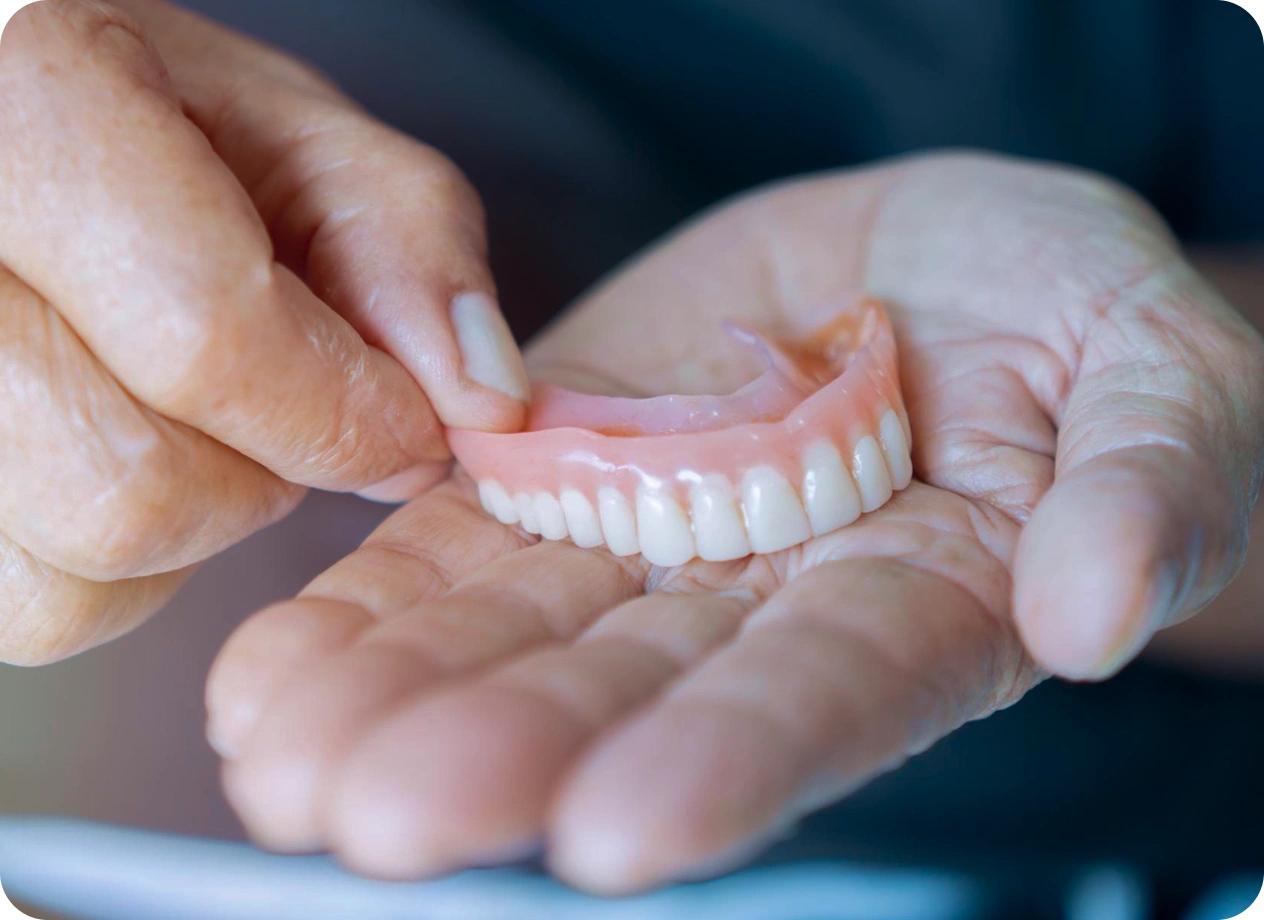
Complete removable dentures are fully covered by the CDCP, whether they're standard, immediate, or temporary. The plan also includes the care period right after your dentures are placed, when small adjustments help the base settle comfortably against your gums. That means you can replace a full arch of missing teeth without paying out of pocket for the core treatment.
-

Removable Partial Dentures in Acrylic or Cast Metal Covered by the CDCP
If you still have some natural teeth, the CDCP covers removable partial dentures made of acrylic or cast metal to fill the gaps left by missing teeth. Cast metal support frameworks require preauthorization, so we submit the clinical details to the plan before we start that type of partial.
-

Repairs, Relines and Rebases Covered by the CDCP
The CDCP covers the maintenance treatments that keep an existing denture usable, including repairs, relines, rebases, adjustments, and resin additions. These smaller procedures carry no direct cost to you when the plan applies, so a cracked or loose dental prosthesis doesn't turn into a major expense.
-

What the CDCP Does Not Cover for Dental Prostheses
Some prosthetic work still falls outside the plan. The CDCP doesn't cover dental implants, neither the materials nor the surgery, though the prosthetic portion of an implant-supported denture may be partially covered when there's medical necessity and preauthorization. Purely cosmetic changes, like reshaping a healthy smile or capping a sound root for looks alone, stay excluded as well.
Why Choose Oralvie for Your Dental Prostheses Covered by the CDCP?
Why Choose Oralvie for Your Dental Prostheses Covered by the CDCP?
At Oralvie, we’re a Montreal dental clinic that accepts the CDCP. We can bill the plan directly when your denture or prosthesis is eligible, but a preauthorization request usually has to be submitted before treatment so the CDCP can confirm your coverage. This review can take a few weeks, so we aren’t always able to give you an immediate answer, and our team handles the process and keeps you informed once the plan has made its decision. For eligible patients, we don’t charge the difference between what the plan reimburses and our usual rates, which keeps your out-of-pocket cost predictable.
Access to care shouldn’t depend on your budget, which is why we offer flexible financing options to spread out any remaining balance. The Canadian Dental Care Plan sets the reimbursement, so our team handles the paperwork while you focus on treatment, pairing conscious sedation with a genuinely no-judgment approach and bilingual French and English service. From your first call to the day your new dental prosthesis lets you chew and speak comfortably in everyday life, your Oralvie dentist stays focused on restoring your smile.
How to Access Your Dental Prostheses Covered by the CDCP at Oralvie?
-
Confirm Your CDCP Eligibility
Eligibility for the Canadian Dental Care Plan is based on a few clear criteria. You need to be a Canadian resident for tax purposes, have no access to private dental insurance, and report an adjusted family net income under $90,000, with your tax return filed for the year. Since June 2025, Canadians of all ages qualify, so coverage is no longer limited by age.
-
Get Your CDCP Member Card
Once the government approves your application, you'll receive a CDCP member card from Sun Life along with your coverage start and end dates. Sun Life administers the plan on behalf of the Government of Canada, and your coverage renews each year, so it's worth confirming your renewal before you book major work.
-
Plan Your Consultation and Preauthorization
At your consultation, we examine your mouth and plan the prosthesis that fits your specific needs, and a complete dental exam gives us the full picture before we settle on a treatment plan. Some options, like cast metal frameworks and certain partials, require preauthorization before treatment starts, so we submit those details to the plan first. That extra step helps you understand your timeline and what your appointment schedule will look like.
-
Settle Your Co-payment After Direct Billing
We submit the claim to the CDCP on your behalf, and the plan reimburses its share of the cost directly to Oralvie as the provider. For eligible patients, we don't add the gap between the plan's rate and our usual fee, so you pay only your remaining balance under our standard terms.



How Much of Your Dental Prostheses Does the CDCP Cover?
How Much of Your Dental Prostheses Does the CDCP Cover?
How much the CDCP covers depends on your household income and the plan’s established fees, not on a single flat rate. Your share of the cost, and how much you pay out of pocket, is based on where your family income falls within the plan’s tiers.
Coverage Based on Your Adjusted Family Net Income
The share the CDCP pays is based on your adjusted family net income. Households with an income under $70,000 receive 100% coverage at the plan’s established fees, those between $70,000 and $79,999 receive 60%, and those between $80,000 and $89,999 receive 40%. The lower your income, the more the plan will pay, and you’re responsible for the remaining percentage.
Gap Between CDCP Established Fees and the Quebec Dental Fee Guide
The government sets the CDCP’s established fees lower than the standard Quebec dental fee guide, which is the rate most clinics charge. Under the plan, a patient normally pays the difference between the actual cost of treatment and the amount the CDCP reimburses. At Oralvie, we absorb that gap for eligible patients, so you don’t pay more just because the plan’s established fees sit below the provincial guide.
Frequency and Replacement Limits for Dentures
Frequency limits also apply to CDCP dentures. The plan replaces a full denture only after several years and covers relines on a set schedule, so you can’t renew a prosthesis whenever you like. Higher-cost services can need preauthorization, which is why we check the plan’s terms before booking, and knowing these limits up front helps you plan around what you’ll need.
Frequently Asked Questions About Dental Prostheses Covered by the CDCP
-
Does the CDCP Cover Complete and Partial Dentures?
Yes, the CDCP covers both complete and partial removable dentures for eligible patients. It also pays for the repairs, relines, and rebases that keep each dental prosthesis working over time.
-
Does the CDCP Cover Prostheses on Implants?
Dental implants aren’t covered, including both the materials and the surgery to place the root-like fixture in the bone. The prosthetic portion of an implant-supported denture may be partially covered, but only with documented medical necessity and preauthorization.
-
How Much Will I Pay for My Dentures With the CDCP?
What you pay depends on your adjusted family net income tier and the difference between the plan’s established fees and the Quebec fee guide. The higher your coverage tier, the lower your out-of-pocket cost, and any remaining balance is settled at the clinic.
-
How Often Will the CDCP Pay for New Dentures?
The CDCP replaces dentures on a fixed schedule, so a new full denture is covered only after several years, with relines and rebases spaced out in between. If you need a replacement sooner for a valid clinical reason, we can check the plan’s rules before you book.
-
How Do I Know if I Qualify for the CDCP?
You qualify if you’re a Canadian resident with no private dental insurance and a qualifying family income, with your taxes filed. Once you understand where you fit, you apply to the Canadian Dental Care Plan through the federal government’s online program, and we’re glad to walk you through it.
Book an Appointment for Your Dental Prostheses Covered by the CDCP in Montreal!
Missing or failing teeth affect how you eat, speak, and feel, and the CDCP now helps make quality dental prostheses easier to access. At Oralvie, we accept the Canadian Dental Care Plan, bill it directly, and offer Flexiti financing at 0% so any remaining balance never stands between you and treatment. Call us at 514-313-0122 to book an appointment and receive a clear plan for your CDCP-covered prosthesis.