


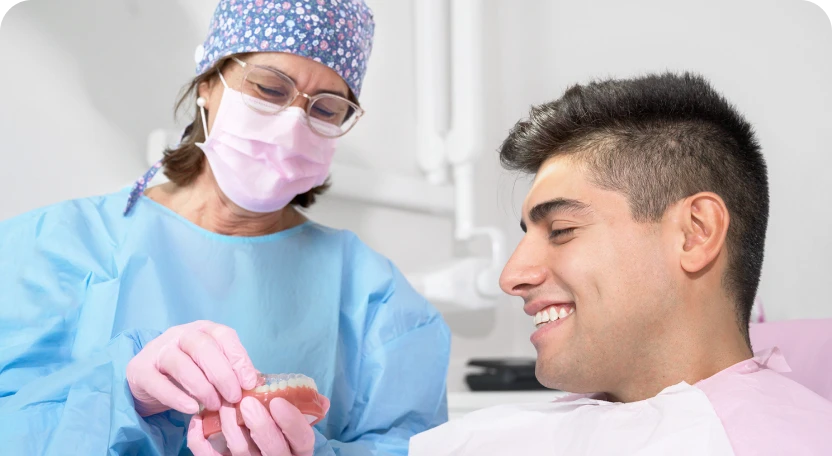
Dental prosthetics are designed to replace your natural teeth and missing gums. There are mainly two types: partial dentures, which replace a few teeth, and complete dentures, used when no natural teeth remain. Whether to replace a few teeth to complement the remaining natural teeth or an entire arch, these artificial prosthetics are custom-made to fit perfectly in your mouth.
In this article, we’ll explore together how dental prosthetics can improve your quality of life.
What Is a Dental Prosthesis?
A dental prosthesis is a device designed to replace one or more missing teeth. It helps restore chewing function, the aesthetics of the smile, and sometimes even pronunciation. Prostheses are often custom-made from a mold of the patient's mouth and can be made from resin, ceramic, or metal, depending on the needs. Prostheses can either be removable (meaning you can easily take them out) or fixed onto implants for greater stability. 💡Are you considering dental implants in Montreal? Your dentist can recommend the type of prosthesis best suited to your situation.What Are the Types of Dental Prostheses
Complete Dentures
Complete dentures replace all natural teeth in your mouth. These removable dentures come in two varieties: immediate dentures and conventional dentures. Dentists insert immediate dentures right after tooth extraction, while conventional dentures are placed after your gums have healed. It's crucial to clean your complete dentures properly to prevent tartar buildup. Dentures made from acrylic offer a full set of artificial teeth for those who’ve lost all their natural ones.Partial Dentures
Partial dentures are ideal for replacing a few missing teeth. You have different options depending on your situation: Removable partial dentures are recommended if your neighboring teeth are fragile. They can be easily removed for cleaning and attach using discreet clasps. For increased stability, there are hybrid systems. These complete partial dentures can be fixed onto implants or remaining teeth, thus combining the benefits of fixed and removable dentures. Daily maintenance of your removable partial denture is crucial to avoid gum irritation. We also recommend biannual check-ups with your dentist to check the fit and condition of your appliance.Dental Crowns
Dental crowns cap damaged or decayed teeth to restore their shape and strength. Dentists can make these prosthetic caps from various materials, including acrylic resin, metal, and porcelain. Regular checkups are important to ensure your crown fits securely. Crowns protect your teeth and improve their appearance, making them a popular type of dental prosthesis.Dental Bridges
Dental bridges fill gaps between missing teeth by anchoring onto nearby teeth. A precise fit is necessary to avoid gum irritation. We recommend discussing long-term maintenance with your dentist.Implant-Supported Prostheses
Implant-supported prostheses offer a stable, long-term solution anchored in your jawbone. Dentists can attach hybrid dentures to implants or remaining natural teeth. The titanium implants fuse with your jawbone, providing a strong foundation for artificial teeth. Be careful when handling these prostheses, as physical damage can occur if you're not gentle.Temporary Prostheses
Temporary prostheses serve as short-term solutions during your dental treatment. You may need frequent fitting adjustments until your permanent prosthesis is ready. These prostheses offer immediate aesthetic and functional benefits while you wait for your final dental work.What Are the Benefits of Dental Prostheses
Aesthetic
Are you looking to improve your smile? Dental prostheses can really make a difference! They restore a beautiful natural appearance to your mouth by replacing missing teeth. Thanks to materials like acrylic resin or porcelain, they can recreate the exact shape and color of your original teeth. The result? A radiant smile that will give you confidence in any situation.Functionality
One of the key benefits of dental prostheses is the significant improvement in functionality they offer. With these devices, you'll find it easier to chew, allowing you to savor your favorite foods once more. They provide stability to your bite, enhancing your eating efficiency. Additionally, improved functionality positively impacts your speech, enabling clearer and more confident communication.Mouth Protection
Dental prostheses play a crucial role in protecting your mouth. They help safeguard your gums from excessive pressure that can occur when teeth are missing. However, it's important to note that poorly fitting prosthetics may cause oral health issues. If you notice any problems like gum discomfort or sores, it's best to consult your dentists promptly to address these concerns.Easy Maintenance
Taking care of your dental prostheses is quite straightforward. A regular cleaning routine will help prevent plaque buildup and keep your device in top shape. Most prostheses are known for being durable and long-lasting. Typically, you can expect your prosthesis to last about 5–8 years. To ensure continued comfort and effectiveness, we recommend considering replacement after about 10 years of use.How to Choose the Right Type of Dental Prosthesis
Condition of Your Current Teeth
If you still have a few natural teeth, you might opt for a partial denture, which requires a moderately complex fitting, offers good stability, and needs regular maintenance. On the other hand, if you no longer have any teeth, a complete denture will be necessary, but its fitting is more complex and its stability can vary from case to case. Before making a decision, it is essential to evaluate the condition of your natural teeth with the help of a professional, in order to choose the solution that will suit you best.Budget
The number of teeth to be replaced greatly influences the final price. Here’s an overview of the cost variations observed in Canada based to the type of prosthesis:- Partial prosthesis: Ranges from CAD $500 to $2,500, depending on the materials and complexity.
- Complete prosthesis: Costs on average between CAD $1,000 and $3,000 per jaw.
- Implant prosthesis: Costs about CAD $4,000 per tooth, or between CAD $8,950 and $16,800 for a complete All-on-4 arch.
Condition of Your Jaw and Gums
Now, let's consider your jaw and gums. For implants, you must have enough bone density. In some cases, bone loss can make implants tricky. With dentures, we need to keep an eye on how your jaw changes over time. As you age, your jaw may shrink, affecting how your dentures fit.Desired Comfort and Aesthetics
The comfort of your prosthesis greatly depends on the type of attachment and the material chosen. For a satisfactory aesthetic result, we pay particular attention to the color of the prosthesis and the shape of the artificial teeth. Our goal is to provide you with a natural appearance and a comfortable fit. We work with you to create a prosthesis that meets your expectations in terms of comfort and aesthetics.Treatment Duration
Different prostheses take different amounts of time. Some treatments wrap up quickly, while others can take years. For example, you can get immediate dentures right after tooth removal. But conventional dentures need time for your gums to heal first. We'll walk you through each process so you know what to expect.Denturist's Recommendation
Your dentist plays a key role in this decision. They may suggest different options based on your specific needs. Regular check-ups every 6 months are crucial. These appointments let us make sure your prosthesis fits well and works properly. We're here to guide you through the whole journey, from choosing your new teeth to keeping them in top shape.What Are the Steps for Getting a Dental Prosthesis at Oralvie
1. Consultation to Assess Your Mouth
We'll start by thoroughly examining your mouth. This initial check-up helps us understand your specific needs and determine the best treatment options for you. X-rays might be necessary to get a complete picture of your jaw structure and overall oral health. We want to make sure we have all the information needed to support you properly before suggesting any particular prosthesis.2. Taking Dental Impressions
Next, we'll take precise molds of your mouth. These impressions are crucial for creating a prosthesis that fits you perfectly. We'll put a special material in your mouth to capture every detail. A well-fitting prosthesis ensures both comfort and proper function, so this step is really important.3. Fitting and Adjustments
Once your prosthesis is ready, we'll have you try it on. The prosthesis will be placed in your mouth, and we'll check how it fits and functions. You might need to come back for a few visits as we make adjustments to get everything just right. Our goal is to make sure your new teeth feel comfortable and work well when you're eating and speaking.4. Ongoing Support and Checkups
After you've got your new prosthesis, we'll continue to support you with regular check-ups. These follow-up visits are key to maintaining the life of your prosthesis. We'll keep an eye out for any wear or damage, as these issues can affect your ability to chew and digest food properly. If we notice any problems, we can address them quickly, sometimes even replacing parts to keep your prosthesis in top shape.Trust Oralvie for Your Dental Prosthesis Design!
Are you looking for a solution to regain a radiant smile? At Oralvie, we understand your needs. Our dedicated team offers custom dentures in a warm environment. With our flexible financing options and personalized treatment plans, we help you achieve the smile of your dreams. Schedule an appointment today for a free consultation!Frequently Asked Questions About Dental Prosthesis
How to Clean a Dental Prosthesis Effectively?
We recommend daily cleaning of your dental prosthesis to keep it in top shape. Gently brush all surfaces with a soft-bristled toothbrush and non-abrasive cleaner to remove plaque buildup. Rinse thoroughly under lukewarm water, avoiding hot temperatures that might warp the prosthesis. Soak overnight in a specialized solution to disinfect and freshen. You should visit your dentist twice yearly for professional assessments and deep cleaning.How Long Does It Take to Adjust Before It Feels Comfortable?
You'll likely need a few weeks to get used to your new dental prosthesis. During this time, you may experience some soreness in your gums and slight changes in speech. These sensations are normal as your mouth adapts to the device. We advise scheduling follow-up appointments with your dentist for necessary adjustments. Timely tweaks can prevent ongoing discomfort or difficulties with chewing. Patience is key; most patients find their prosthesis becomes second nature with consistent wear.Can I Eat Normally with a Partial Denture?
We suggest beginning with softer foods when you first receive your partial denture. Gradually introduce firmer items as you become more comfortable. Try to chew evenly on both sides of your mouth to distribute pressure across your teeth and prosthesis. If you notice persistent discomfort while eating, don't hesitate to contact your dentist. They can assess the fit and make adjustments to ensure proper function. With time and practice, most people return to enjoying their favorite meals without issue.How Do I Know If My Prosthesis Fits My Jaw Properly?
You should pay attention to signs that might indicate an improper fit. These include persistent gum pain, shifting of the prosthesis while speaking or eating, and difficulties with pronunciation. Regular dental check-ups are crucial as your jaw shape can change over time. Loose or worn dentures can cause significant discomfort and potentially harm your oral health. We encourage you to seek professional help promptly if you notice any issues.Table of contents
- What Is a Dental Prosthesis?
- What Are the Types of Dental Prostheses
- Complete Dentures
- Partial Dentures
- Dental Crowns
- Dental Bridges
- Implant-Supported Prostheses
- Temporary Prostheses
- What Are the Benefits of Dental Prostheses
- Aesthetic
- Functionality
- Mouth Protection
- Easy Maintenance
- How to Choose the Right Type of Dental Prosthesis
- Condition of Your Current Teeth
- Budget
- Condition of Your Jaw and Gums
- Desired Comfort and Aesthetics
- Treatment Duration
- Denturist's Recommendation
- What Are the Steps for Getting a Dental Prosthesis at Oralvie
- 1. Consultation to Assess Your Mouth
- 2. Taking Dental Impressions
- 3. Fitting and Adjustments
- 4. Ongoing Support and Checkups
- Trust Oralvie for Your Dental Prosthesis Design!
- Frequently Asked Questions About Dental Prosthesis
- How to Clean a Dental Prosthesis Effectively?
- How Long Does It Take to Adjust Before It Feels Comfortable?
- Can I Eat Normally with a Partial Denture?
- How Do I Know If My Prosthesis Fits My Jaw Properly?
Related articles
Our articles can help you better understand our services and also inform you about various topics related to your dental health.
-
 Dental Insurance 3 min read
Canadian Dental Plan: Are You Eligible?
Good news for your smile. The way some dental care is covered has changed recently. If your situation has changed, you may stil...
Read more -
 Dental Health 11 min read
When Should A Child Go To The Dentist?
A child should see a dentist by their first birthday or within six months of the first tooth appearing. A child’s first denta...
Read more -
 Dental Health 13 min read
Teeth Grinding in Sleep: Causes and Solutions for Kids
Bruxism (teeth grinding) is a common phenomenon in children that occurs mainly during their sleep. You may have noticed these c...
Read more
We can help you if you book today!
Schedule online now or call us with any questions.