


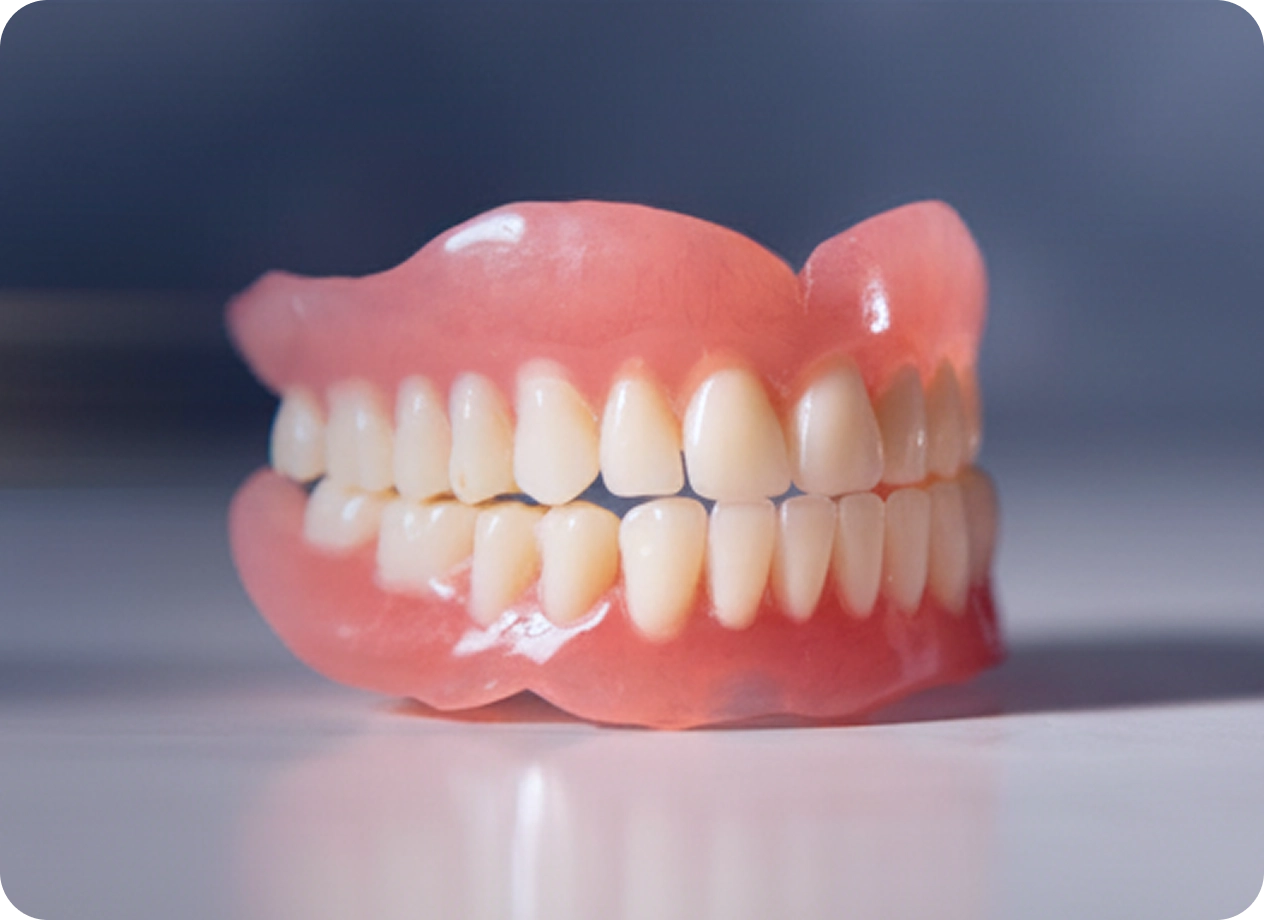
Dentures are cleaned every day with 3 simple actions: take them out after meals, brush them with a soft toothbrush, and soak them overnight. Plaque and tartar build up on the acrylic the same way they do on natural teeth, which is why daily brushing keeps dentures comfortable and your gums healthy.
This guide covers the 5 steps in order, the mistakes that damage dentures the most, and how often you need a professional follow-up to keep everything in good shape.
1. Remove and Rinse Dentures After Meals
Dentures trap food debris the moment a meal ends, which makes the after-meal rinse the first habit to build. Take them out after each meal when the setting allows it, then rinse them under warm water to wash off most of the loose particles. Hold the appliance over a sink filled with water or over a folded towel, so a single drop onto a hard surface does not crack it. One thing to avoid: never rinse dentures with hot water, which warps the acrylic permanently and changes the fit when you place them back in your mouth.2. Brush Dentures With a Soft Brush and a Non-Abrasive Cleanser
Brushing lifts plaque off the denture surface every day, before it hardens into tartar that only a professional can remove. Set up a simple kit and use it once a day, ideally at night:- Soft-bristle toothbrush or a dedicated denture brush
- Mild, unscented liquid soap or a cleanser made for dentures
- 1 full brushing per day, done gently over every surface
3. Clean the Mouth and Gums With Dentures Out
Your gums need attention too, because a mouth left uncleaned puts bacteria straight back onto a freshly cleaned appliance. With your dentures out, brush the gums, palate and tongue gently with a soft brush to lift plaque and stimulate circulation in the tissue. If you wear a partial denture, also brush the remaining natural teeth and floss between them, since that is where new decay tends to start. This one habit keeps the gums healthy, controls bad breath, and prevents the irritation that comes from bacteria trapped under the appliance all day.4. Soak Dentures Overnight
Taken out and dropped in a glass overnight, dentures give your gums a rest from the pressure they carry all day. Fill the container with warm water or a cleansing solution made from effervescent tablets, and let the appliance soak while you sleep. Soaking softens the plaque and tartar that brushing missed, so the surface cleans up well and the next brushing takes less time. For stubborn stains and hard deposits, the Canadian Dental Association suggests a weekly soak in a half-and-half mix of warm water and white vinegar. Use warm water only: if the denture has metal clasps, skip the vinegar and chlorine solutions that corrode them, and always keep the appliance wet, as acrylic left to dry in open air loses its shape.5. Rinse and Reseat Dentures
Rinse the dentures under clean running water for several seconds before you reseat them, above all after a night in an effervescent cleanser or a vinegar solution, since chemical residue irritates the soft tissue of your mouth. Run a finger over each surface to confirm no deposit or film is left behind. Place the appliance back only once it feels clean and smooth, and you will wear it through the day with comfort and confidence, ready to smile without a second thought. From here, how you clean and care for dentures shifts a little with the type of appliance you look after.Denture Cleaning by Type of Appliance
Denture cleaning follows the same 5-step routine for every removable appliance, whether you wear a complete or a partial denture. A fixed appliance changes the picture: it stays in the mouth and is cared for much the way natural teeth are, so the best method depends on the shape of prosthesis in your mouth.Complete and Partial Removable Dentures
A removable denture comes out of the mouth, which makes both surfaces reachable, including the one that rests against the gum. A partial denture adds one constraint: its metal clasps bend under sideways pressure, so brush them gently without twisting them out of shape. Keep up the care of the remaining natural teeth as well, since decay often starts at the contact point where the clasp meets the tooth.Fixed Bridges and Implant-Supported Dentures
Unlike a removable appliance, a fixed bridge or a crown never leaves the mouth, so you clean it like natural teeth: brushing morning and night, floss or interdental brushes, and a water flosser for the spots a brush cannot reach. The same goes for implant-supported dentures, which anchor to the jaw and stay put day and night. Skip the cleaning under the appliance and plaque settles around the implants, where it inflames the tissue and can undo the work a professional put into the restoration. A consistent daily routine keeps the gums healthy and helps the prosthesis last well beyond its first few years.What Mistakes Damage Dentures the Most?
Cleaning mistakes wear an appliance out long before normal aging does, and most of them trace back to the wrong products or a skipped step. Learn which habits cause the most damage so you can head off the repairs and replacements they lead to.Abrasive Products and Hot Water
Keep 3 products away from your dentures, because each one grinds down or melts the acrylic:- Regular toothpaste, whose abrasives and whitening agents scratch the surface
- Powders and household cleaners that are far too harsh for a denture base
- Hot or boiling water, which softens and warps the acrylic
Bleach, Chlorinated Cleansers and Skipped Soaking
If a denture dries out on the counter overnight, the acrylic shrinks and the fit changes for good. Water keeps the shape stable, so make sure the appliance always sits in liquid when it is out of your mouth. Bleach, chlorinated cleansers, and oxygenated products belong to monthly use at most, never on metal clasps that they corrode, and always rinsed thoroughly afterward. Let the care slip over time and tartar and stains set in, until only a professional cleaning can take them off.How Do You Prevent Denture Stomatitis and Infections?
Dentures left unclean turn into a reservoir for bacteria and Candida yeast, the main cause of denture stomatitis. This red inflammation of the gums and palate often hurts very little at first, which is why so many people miss it: denture stomatitis affects 15% to over 70% of denture wearers, depending on the group studied. Two habits prevent most cases. Rigorous daily hygiene clears the bacteria before it colonizes the acrylic, and overnight removal gives the tissue hours to recover, which helps keep the palate healthy and free of irritation. When redness, burning, or soreness lasts more than a few days, book a professional exam with a denturologist to rule out an infection and avoid a longer treatment.Denture Cleaning Frequency and Professional Follow-Up
Dentures need care on two schedules: a daily clean at home and a professional exam once a year. At that yearly visit, the dentist checks the fit, looks for acrylic wear, assesses gum health, and removes the hard tartar deposits that brushing and soaking cannot lift. The yearly check matters more with age. Roughly 15% of Canadian adults 65 and older have lost all their natural teeth, so a large share of older patients rely on dentures every day. Oral health tracks that dependence too. Fair or poor self-reported oral health reaches 25.1% among denture wearers with some natural teeth, against 14.1% for people with natural teeth only. Your jawbone also remodels over time, so a denture that fit well 2 years ago can loosen between visits. A quick complete dental exam catches that shift early, and a reline restores the shape and hold that keep a denture in good condition. Book one whenever the fit feels off, not just when something already hurts.Care for Your Dentures at Oralvie
A clean denture is a daily habit, but it still needs a professional eye once a year. At our Montreal dental clinic, we check, adjust, repair, or replace your dentures and every other type of dental prosthesis, with conscious sedation available and a non-judgmental approach from a bilingual FR / EN / ES team you can also reach on WhatsApp. Cost should never stand in the way of a comfortable fit. We offer financing through the Dentoplan platform and in-house financing with a 30% deposit followed by biweekly payments, and we welcome patients covered by the Canadian Dental Care Plan. Call us at 514-313-0122 to book your visit.Frequently Asked Questions About Denture Cleaning
Can You Clean Dentures With Toothpaste?
No, regular toothpaste is too abrasive, and its fine grit scratches the acrylic so that the micro-scratches then trap plaque and stain. Clean with a mild liquid soap or a cleanser made for dentures instead, which lifts debris without damaging the surface.Should You Take Your Dentures Out at Night?
Yes, in most cases: taking them out overnight rests the gums from constant pressure and lowers the risk of an infection like denture stomatitis. Soak them in warm water or a cleansing solution while you sleep so they stay moist and hold their shape.How Do You Remove Tartar From Dentures?
Soak the denture overnight once a week in a half-and-half mix of water and white vinegar, then brush it gently to lift the softened deposits. Hardened tartar that will not budge comes off during a professional cleaning at the clinic.Can You Use Vinegar or Bleach to Clean Dentures?
Diluted white vinegar works for all-acrylic dentures about once a week. Bleach and chlorinated cleansers are different: they corrode metal clasps and belong to exceptional use only, always followed by a thorough rinse before the denture goes back in your mouth.How Often Should Dentures Be Replaced?
Most dentures last 5 to 10 years, though the jawbone changes shape faster than the acrylic wears out. The dentist checks the fit at every visit and recommends a reline or a full remake at the right time, so the schedule follows your mouth rather than the calendar.Table of contents
- 1. Remove and Rinse Dentures After Meals
- 2. Brush Dentures With a Soft Brush and a Non-Abrasive Cleanser
- 3. Clean the Mouth and Gums With Dentures Out
- 4. Soak Dentures Overnight
- 5. Rinse and Reseat Dentures
- Denture Cleaning by Type of Appliance
- Complete and Partial Removable Dentures
- Fixed Bridges and Implant-Supported Dentures
- What Mistakes Damage Dentures the Most?
- Abrasive Products and Hot Water
- Bleach, Chlorinated Cleansers and Skipped Soaking
- How Do You Prevent Denture Stomatitis and Infections?
- Denture Cleaning Frequency and Professional Follow-Up
- Care for Your Dentures at Oralvie
- Frequently Asked Questions About Denture Cleaning
- Can You Clean Dentures With Toothpaste?
- Should You Take Your Dentures Out at Night?
- How Do You Remove Tartar From Dentures?
- Can You Use Vinegar or Bleach to Clean Dentures?
- How Often Should Dentures Be Replaced?
Related articles
Our articles can help you better understand our services and also inform you about various topics related to your dental health.
-
 Uncategorized 9 min read
Orthodontic Insurance Coverage in Canada and What Is Covered
A braces or aligner bill runs over months or years of treatment, and orthodontic insurance coverage decides how much of it a fa...
Read more -
 Uncategorized 10 min read
How Does Dental Insurance Work in Canada?
Dental insurance works by paying part of each dental bill in exchange for a regular premium, with routine care reimbursed at a ...
Read more -
 Uncategorized 11 min read
Partial vs Complete Dentures: How to Choose Between Them
A removable denture can replace missing teeth and comes out of the mouth for cleaning, which is where the choice between a part...
Read more
We can help you if you book today!
Schedule online now or call us with any questions.