


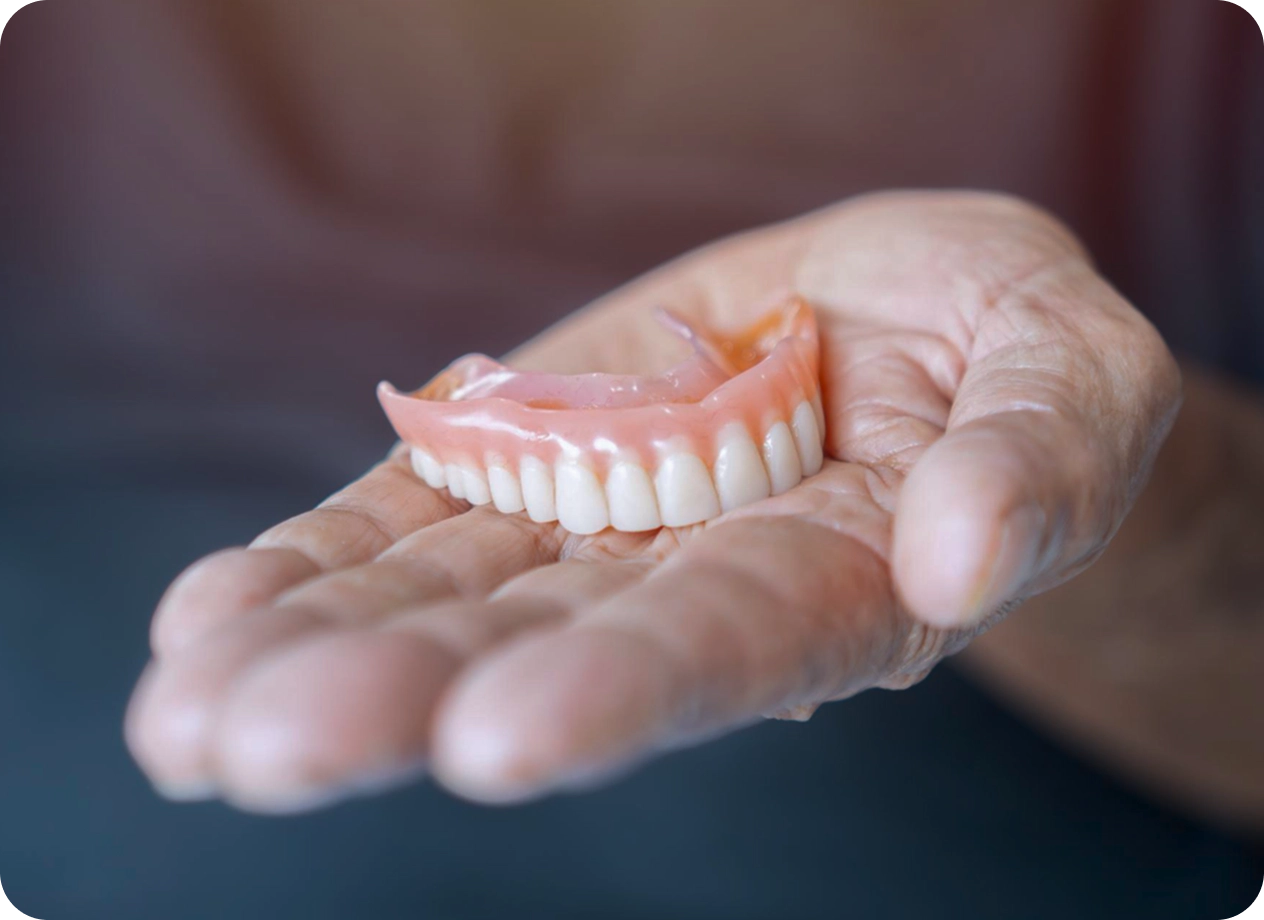
A removable denture can replace missing teeth and comes out of the mouth for cleaning, which is where the choice between a partial and a complete option begins. A partial denture fills 1 or several gaps and rests on the remaining healthy teeth, while a complete denture covers every tooth on a full arch and sits on the gums. Both are made to restore comfortable chewing, clearer speech, and the natural appearance of a full smile.
This guide covers the differences between the two, the criteria that decide which one fits, how each denture is made, the fixed alternatives, and the daily care that protects the result.
What Are the Differences Between Partial and Complete Dentures?
A removable denture differs from the next mainly in 2 ways: how many teeth it has to replace and how it holds in the mouth. Those 2 points drive the fit, the appearance, and whether an entire arch or a single gap needs to be restored.Number of Teeth Replaced and Type of Tooth Loss
A partial denture fills 1 or several gaps left by missing teeth and rests on the natural teeth that remain in place. A complete denture, by contrast, is made to replace an entire arch that no longer holds any teeth, upper or lower. 1 arch can wear a partial while the other needs a full replacement, since tooth loss rarely moves at the same pace top and bottom. Extraction of the last loose or decayed teeth is usually the tipping point that pushes a case toward the complete option.Retention by Clasps or by Suction on the Gums
Compared to a complete denture, a partial denture holds through metal or resin clasps that grip the neighbouring teeth, so it feels stable from the first day. The complete version takes a different route, staying by suction across the gums and the residual ridge, so its stability rises and falls with the shape of the ridge and the flow of saliva. That gap shows up most at the dinner table: a partial anchored on real teeth lets you eat firm foods sooner, while the gum-borne appliance asks for a careful, comfortable start before harder foods feel natural.Materials and Fabrication for Each Type of Denture
Materials follow the type of support, so the base under each denture differs. A complete denture, along with a temporary partial that bridges the healing months, sits on a pink acrylic resin base moulded to the gums. A definitive partial is made on a cast metal framework instead, thinner and more rigid, so it can clip onto the teeth that remain. That build choice also touches coverage, since public plans like the CDCP and private insurance often treat acrylic and metal appliances on different terms, which can change what a patient pays and how snug the fit stays over time. Materials settle the build, but the choice between the 2 types comes down to the condition of the mouth itself.Which Criteria Decide Between the 2 Types of Denture?
A removable denture is chosen on the state of the mouth first, not on personal preference. The right choice weighs 3 practical factors that different individuals balance when making this decision: biology, daily function, and budget.Condition of the Remaining Teeth and Jawbone
A partial denture becomes possible when the remaining teeth are healthy and well distributed enough to serve as abutments. If those existing teeth are loose, decayed or too few, extraction clears the way and a full-arch replacement takes over. A dental exam and a jaw radiograph settle the call, since they reveal the bone height that helps maintain a stable base, prevent a loose fit later, and restore proper facial support. Fewer Canadians are fully toothless than in past decades, according to Statistics Canada, so many patients keep enough sound teeth to make a partial realistic.Comfort, Chewing and Speech in Daily Life
Compared to the complete version, a partial covers less of the palate, so most people adapt to it and feel comfortable within days. A full-arch denture asks for a longer learning curve: chewing efficiency drops at first, harder foods return to the plate step by step, and speech takes practice to sound natural again. Eating and speaking clearly are what most patients tie to their confidence, so this daily lifestyle trade-off is just as important as the clinical picture.Budget and Coverage in Canada
Check your coverage before you weigh the options, because the paid share changes the math on both types. Public and private plans list dentures as a covered service for eligible patients, and the fine print decides what you actually pay. The Canadian Dental Care Plan covers both partial and complete dentures, along with the repairs, relines and rebases that follow, and it replaces a full denture only once the current one is at least 8 years old. In Quebec, RAMQ adds another route: recipients of a financial assistance program with a claim slip gain coverage for acrylic dental prostheses after 24 consecutive months of eligibility. Private insurance can provide added benefits on top, so the exam and a written estimate are what turn these factors into a real number that fits your budget and the care you need. With the type settled, the next question is how a removable denture actually comes together.How Is a Removable Denture Made?
Fabrication follows the same main path for both types, and the metal framework of a definitive partial is the one real difference. A dentist or a denturist shapes each appliance across a short series of visits, so careful planning at the start protects a proper fit at the end.Exam, Impressions and Try-In
A full exam of the mouth opens the sequence, and the clinician checks the gums and any healthy teeth worth keeping. A set of impressions of each arch is then used to build the appliance in a dental lab, followed by a try-in visit that confirms the bite, the fit, and the appearance before anything is finalized. In many clinics the dentist handles the oral side and the denturist crafts the appliance, though the split of that work varies from one practice to the next.Immediate Dentures Placed on Extraction Day
When teeth have to come out, an immediate denture can be placed on extraction day to replace them at once, so the patient never leaves the clinic without teeth during healing. This same-day appliance stays a temporary one: the gums shrink and change shape as they heal, so a reline or a fresh remake follows after a few months. Planning for that second appliance from the start keeps the eventual fit predictable and the gaps covered throughout.The Adjustment Period After Fitting
Once a new denture goes in, the mouth takes a short while to manage the appliance, so the first days can bring extra saliva, a few sore spots, and moments where words are harder to speak clearly. Short follow-up visits let the clinician ease those pressure points, and daily comfort tends to improve as the tissues settle and the sore areas calm down. A patient should call the clinic when pain does not remain manageable, rather than putting up with it, since a quick adjustment usually makes the appliance comfortable again. For anyone who would rather not settle into a gum-borne appliance at all, a fixed alternative becomes the next option to weigh.Which Fixed Options Replace a Removable Denture?
A removable denture is not the only route to a restored smile, and comparing it with fixed work belongs in any honest decision. 2 fixed options stand out for patients who want a better, steadier hold: a denture anchored on implants and a cemented bridge, each carrying its own conditions.Implant-Supported Dentures for Added Stability
Unlike an appliance that rests on the gums, a denture retained by dental implants anchors directly in the jawbone, which lifts both its stability and bite force. This route requires 2 conditions: minor surgery to place the implants and enough bone volume to hold them. It also helps maintain the shape of the ridge, since the residual bone keeps resorbing year after year under a gum-borne denture and gradually loosens the fit, so implants can prevent some of that slow change and improve how the appliance sits over time.Fixed Bridges Cemented on Neighbouring Teeth
A fixed bridge is a cemented restoration that can replace 1 to 3 missing teeth by resting on the neighbouring abutment teeth on either side of the gap. Those abutments are prepared and capped with crowns, so the bridge stays fixed and never comes out for cleaning. A bridge holds up only when the existing abutment teeth are healthy and strong enough to carry the load, which rules it out once too many teeth are already gone. Whichever appliance a patient ends up wearing, its daily care and its lifespan decide how long the result holds.Care and Lifespan of a Removable Denture
A removable denture asks for daily care and regular professional follow-up to stay comfortable and to protect the mouth underneath. Good habits at home and timely visits to the clinic keep the appliance healthy to wear and looking its best for years.Daily Cleaning and Overnight Removal
Brush the appliance every day with a soft brush and a non-abrasive cleaner, then take it out at night and let it soak in a denture solution. Regular toothpaste scratches the acrylic and hot water warps it, so both do more harm than good. For a partial denture, keep brushing the natural teeth and floss where the clasps meet them, which helps prevent plaque where decay usually starts and maintains healthier gums.Relines, Rebases and Replacement
A denture that once fit perfectly slowly starts to move and rock as the jawbone keeps remodelling after tooth loss. A reline resurfaces the base against the gums, a rebase renews the whole base, and a full remake replaces the appliance once wear or bone change is too advanced to correct. A complete dental exam at each visit lets the clinician check the fit, the bite, and the health of the tissues, then advise which step suits the case.Book an Appointment to Review Your Denture Options at Oralvie
The right denture comes down to the state of your mouth, and the clearest way to settle it is a proper exam. At Oralvie, our Montreal dental clinic reviews the remaining teeth, the gums and the bone, then recommends a partial or a complete denture that suits your case, your budget and your daily life. We keep the care simple:- Conscious sedation for anxious patients
- A genuine no-judgment approach
- Bilingual service in French and English
- A team you can reach on WhatsApp between appointments
Frequently Asked Questions About Partial and Complete Dentures
Can a Partial Denture Be Converted Into a Complete Denture?
No, one cannot be reshaped into the other. Once the remaining abutment teeth are lost or removed, the clinician builds a brand-new full-arch appliance rather than transforming the one already in place, since its design, base and retention are simply too different to convert.How Long Does a Removable Denture Last?
Usually a few years, though no fixed number holds for everyone. The lifespan depends on daily care and how fast the jawbone remodels underneath, so a well-kept appliance in a stable mouth lasts longer, and since clinical evidence after a reline or a rebase stays limited, professional follow-up is a safer guide than a guaranteed figure.Does a Partial Denture Damage the Remaining Natural Teeth?
No, not when hygiene holds and the clasps fit properly. A well-fitted partial spreads its load without harming the teeth it clips onto, and the real risk is plaque building at the clasp contact points and decay setting in when brushing there slips, which careful daily cleaning prevents.Should a Removable Denture Come Out at Night?
Yes, in most cases. Taking the appliance out overnight rests the gums and lowers the chance of irritation or infection under it, so let it soak in a denture solution to stay clean and keep its shape.Does the Canadian Dental Care Plan Cover Partial and Complete Dentures?
Yes, for eligible patients: the plan covers removable dentures of both kinds, along with the repairs, relines and rebases that follow, and it considers replacing a full denture only after 8 years. In Quebec, RAMQ adds another route: recipients of a financial assistance program with a claim slip gain coverage for acrylic prostheses after 24 consecutive months.Table of contents
- What Are the Differences Between Partial and Complete Dentures?
- Number of Teeth Replaced and Type of Tooth Loss
- Retention by Clasps or by Suction on the Gums
- Materials and Fabrication for Each Type of Denture
- Which Criteria Decide Between the 2 Types of Denture?
- Condition of the Remaining Teeth and Jawbone
- Comfort, Chewing and Speech in Daily Life
- Budget and Coverage in Canada
- How Is a Removable Denture Made?
- Exam, Impressions and Try-In
- Immediate Dentures Placed on Extraction Day
- The Adjustment Period After Fitting
- Which Fixed Options Replace a Removable Denture?
- Implant-Supported Dentures for Added Stability
- Fixed Bridges Cemented on Neighbouring Teeth
- Care and Lifespan of a Removable Denture
- Daily Cleaning and Overnight Removal
- Relines, Rebases and Replacement
- Book an Appointment to Review Your Denture Options at Oralvie
- Frequently Asked Questions About Partial and Complete Dentures
- Can a Partial Denture Be Converted Into a Complete Denture?
- How Long Does a Removable Denture Last?
- Does a Partial Denture Damage the Remaining Natural Teeth?
- Should a Removable Denture Come Out at Night?
- Does the Canadian Dental Care Plan Cover Partial and Complete Dentures?
Related articles
Our articles can help you better understand our services and also inform you about various topics related to your dental health.
-
 Uncategorized 12 min read
Bruxism, Causes, Symptoms and Treatments
Bruxism often goes unnoticed until you wake up with a sore jaw, worn teeth or a dull headache, because most people never catch ...
Read more -
 Dental Insurance 3 min read
Canadian Dental Plan: Are You Eligible?
Good news for your smile. The way some dental care is covered has changed recently. If your situation has changed, you may stil...
Read more -
 Dental Health 11 min read
When Should A Child Go To The Dentist?
A child should see a dentist by their first birthday or within six months of the first tooth appearing. A child’s first denta...
Read more
We can help you if you book today!
Schedule online now or call us with any questions.